Guides
Pub Mortgages
Mortgages for financing a pub purchase or re-mortgage, with the affordability criteria and eligibility requirements lenders apply, explained in our guide.

- Published
- 4 Aug 2026
- Last reviewed
- 1 Oct 2026
- Reading time
- 8 min

In short
How much can be borrowed against a pub depends on which valuation basis the lender uses, and yield-based, going-concern and bricks-and-mortar approaches can produce very different figures on the same property.
A pub mortgage is a specialist commercial mortgage used to buy or refinance a public house, and the valuation method decides how much can be borrowed. Depending on the property and trading structure, lenders rely on going-concern valuations, investment valuations, vacant possession (VP) values, or restricted 90-day and 180-day assessments, so a pub mortgage needs to be structured correctly from the outset to avoid valuation mismatches and declines.
We arrange pub mortgages for experienced operators and first-time buyers, on trading and non-trading pubs, freehold and leasehold, across England, Scotland, Wales and Northern Ireland.
What are pub mortgages?
A pub mortgage is assessed on a going-concern basis: lenders consider both the freehold property value and the sustainable trading income, because a pub's value is driven as much by its profitability as by its bricks and mortar. On the cases we arrange, pub mortgages run at 70% to 75% loan-to-value against a going-concern valuation. Lenders review historic accounts, net profit, turnover trends and operating experience, and strong trading, a credible business plan or a proven operator can materially improve the terms.
Many pubs carry mixed-use elements such as restaurants, letting rooms or small hotels. Lenders usually include these income streams in the valuation and affordability assessment, and they often support higher leverage.
Pub mortgages have largely replaced brewery loans. Breweries historically offered landlords low-interest loans over 10 to 15 years, but the trade-off was a tie: a contract obliging the landlord to buy beer, and often wine, spirits and other drinks, direct from the brewer at full price. These arrangements are now uncommon. A pub mortgage leaves the landlord free to source stock on the open market, which can materially cut running costs, and free-of-tie ownership is one of the main financial reasons buyers choose a mortgage over an operator or brewery arrangement.
How much can you borrow on a trading pub?
Lenders assess a trading pub's affordability on EBITDA (earnings before interest, tax, depreciation and amortisation) rather than personal income, and on the cases we arrange they advance up to 5.0 to 5.5 times EBITDA. EBITDA strips out finance costs, tax and non-cash accounting items to measure the pub's underlying cash flow, which is what services the debt.
In an illustrative worked example, a pub generating £100,000 of sustainable EBITDA could support borrowing of approximately £500,000 to £550,000 at those multiples, provided the valuation supports that level. The multiple is a guideline: the final loan also depends on the going-concern valuation, LTV limits, trading history, location, competition and operator experience, all evidenced by verifiable accounts.
Commercial valuations for pubs
The valuation method applied to a pub directly determines the loan-to-value, the affordability and lender appetite, and it follows the pub's trading status.
- A trading, profitable, owner-occupied pub is valued as an MV1 going concern: the freehold plus sustainable trading performance, assessed from historic accounts, fair maintainable trade and net profit. This is the standard basis for funding a trading pub.
- A pub leased to a third-party operator is valued as an MV1 investment: its investment value is derived from the rental income, lease terms, covenant strength and yield rather than the operator's trading.
- A pub that is not trading, is loss-making or is bought for an alternative use is valued on a vacant possession (VP) bricks and mortar basis, sometimes on a restricted 90-day or 180-day sale assumption that reflects a limited marketing period.
Non-trading pubs: 65% LTV against a 90-day value
Where full trading accounts are unavailable, lending on the cases we arrange is capped at around 65% LTV against a 90-day valuation. A 90-day valuation estimates what the pub would achieve if sold within a restricted 90-day marketing window. It is a deliberately conservative figure that anchors the loan to a quickly saleable property value rather than to unproven business performance. This structure keeps a purchase or remortgage viable without accounts, but it reduces the borrowing and raises the deposit requirement.
How experience changes the terms
Experience is not a strict requirement for a pub mortgage, but it sets the tier of lending. On the cases we arrange, first-time operators are capped at around 65% LTV, and experienced operators can access 70% to 75%, with the most competitively priced products at around 70%. Greater experience also improves pricing and can open up longer terms: on the commercial cases we arrange, terms run from 15 to 40 years. Lenders read experience as evidence that the borrower can manage licensing compliance, staffing, stock control and cash-flow volatility, the operational risks behind trading failure. New entrants can still succeed where other strengths compensate, such as a credible business plan, financial backing, a profitable trading history under previous ownership or a prime location.
An established, well-trading pub can be priced competitively on the high street, but high-street lenders generally demand more operator experience. Specialist lenders ask for less experience and have become increasingly competitive on rate, so the choice between a high street or specialist lender follows the borrower's profile.
For buyers at or after retirement age, many pub mortgage lenders apply higher maximum age limits than residential lenders, so a pub purchase after retirement can be possible with the right lender match.
Freehold pub mortgages
A freehold pub mortgage funds ownership of both the building and the land, the strongest security a lender can take on a pub, and the terms reflect it. With no lease expiry or reversionary risk, freehold pubs attract longer terms and more stable pricing than leasehold pubs, in our experience at 70% to 75% LTV depending on the valuation basis, profitability and experience. Freehold also gives the operator full control to adapt the business model, subject to planning and licensing. Underwriting focuses on historic accounts, EBITDA, management capability and a clear repayment strategy. Values range widely with location and trade, and lenders price sustainable income rather than headline turnover.
Listed pub mortgages
Many traditional pubs are Grade II or Grade II* listed, and listing changes the lending in four ways. First, conservation controls restrict alterations, extensions and changes of use, and any works need listed building consent, which limits future development and raises maintenance costs, so lenders price the constraint. Second, the valuation needs a specialist heritage commercial valuer, on a going-concern MV1 basis where the pub is trading or adjusted bricks and mortar where it is not. Third, listed building lenders apply more conservative LTVs, sometimes requiring additional security or stronger trading. Fourth, specialist buildings insurance covering heritage reinstatement and traditional materials is a lending condition, at higher premiums than standard cover.
Pub mortgages across the UK
We arrange pub mortgages in England, Scotland, Wales and Northern Ireland, at up to 75% LTV throughout, and there are two regional differences worth knowing. In Scotland, pub licensing runs under distinct Scottish legislation and transactions follow Scottish conveyancing, so valuation and legal work must be instructed accordingly. Northern Ireland operates a surrender-based licence system, under which a new pub licence is generally granted only when an existing licence is surrendered (article 7 of the Licensing (Northern Ireland) Order 1996). That affects a pub's value and saleability, and lenders underwrite the licence alongside the property. Beyond licensing and legal process, the underwriting is the same everywhere: trading performance, valuation basis and operator strength. We arrange pub finance across the UK's major markets, including London, Bristol, Cardiff, Manchester, Edinburgh, Glasgow and Belfast.
| Feature | Detail |
|---|---|
| Loan to value | 70% |
| Product fee | 0.75% |
| 3 years fixed | 5.89% |
| 5 years fixed | 5.79% |
Pub mortgage criteria
| Criteria | Detail |
|---|---|
| Maximum loan to value (LTV) | 75% |
| Repayment options | Capital repayment and interest only |
| Term | 15 to 40 years |
| Rate options | Variable, base rate tracker, and 2, 3 or 5 year fixed mortgage options |
| Valuation methods | Going concern or investment (market value 1, MV1), MV2, MV3 or bricks and mortar |
| Experience | Not always required |
| Locations | Available in England, Scotland, Wales and Northern Ireland |
| Pubs with trading accounts (owner occupiers) | Lower interest rates available |
| Pubs without trading accounts (owner occupiers) | Higher interest rates, and personal income may be needed |
| Projections | Accepted in some cases with bank statements |
Listed pub mortgages
Securing a mortgage on a listed pub is more complex than financing a standard commercial property, because of the additional legal protections and conservation controls on listed buildings. Many traditional pubs across the UK are Grade II or Grade II* listed, so lenders assess the regulatory constraints attached to the property as well as the trading business.
Read more about Listed pub mortgagesGet in touch about Listed pub mortgages
Non-trading pub mortgage
Securing a pub mortgage without full trading accounts is still possible, but lenders typically apply more conservative lending terms to manage risk. In our experience, borrowing is capped at around 65% loan-to-value (LTV) and assessed against a 90-day valuation instead of a full going-concern valuation.
Read more about Non-trading pub mortgageGet in touch about Non-trading pub mortgage
Freehold pub mortgage
A freehold pub mortgage is a form of commercial mortgage used to purchase a public house where the buyer acquires ownership of both the property and the land.
Read more about Freehold pub mortgageGet in touch about Freehold pub mortgage
How experience affects pub mortgage terms
| Loan feature | How experience affects it |
|---|---|
| Loan-to-value (LTV) | In our experience first-time operators may be capped at around 65% LTV, while experienced operators can reach 70% to 75%, with the most competitively priced products typically around 70% LTV. |
| Interest rates | Greater experience can mean more favourable pricing, because the lender sees less risk. |
| Loan terms | Proven operators may qualify for longer repayment terms, which helps cash flow and affordability. |
Pub mortgage Scotland
Read about arranging a commercial mortgage for a pub purchase or refinance in Scotland.
Read more about Pub mortgage ScotlandGet in touch about Pub mortgage Scotland
Pub mortgage Wales
Read about obtaining a commercial mortgage for a pub in Wales, whether you are acquiring a new property or refinancing an existing establishment, and the financial and regulatory points to consider for an investment in the hospitality industry.
Read more about Pub mortgage WalesGet in touch about Pub mortgage Wales
Pub mortgage England
Read about the financial and regulatory considerations when arranging a pub mortgage in England.
Read more about Pub mortgage EnglandGet in touch about Pub mortgage England
Pub mortgages Northern Ireland
Read about lender requirements and the application process for pub mortgages in Northern Ireland.
Read more about Pub mortgages Northern IrelandGet in touch about Pub mortgages Northern Ireland
Related mortgage insights and guides

 GuideRead more about Listed pub mortgages
Listed pub mortgages
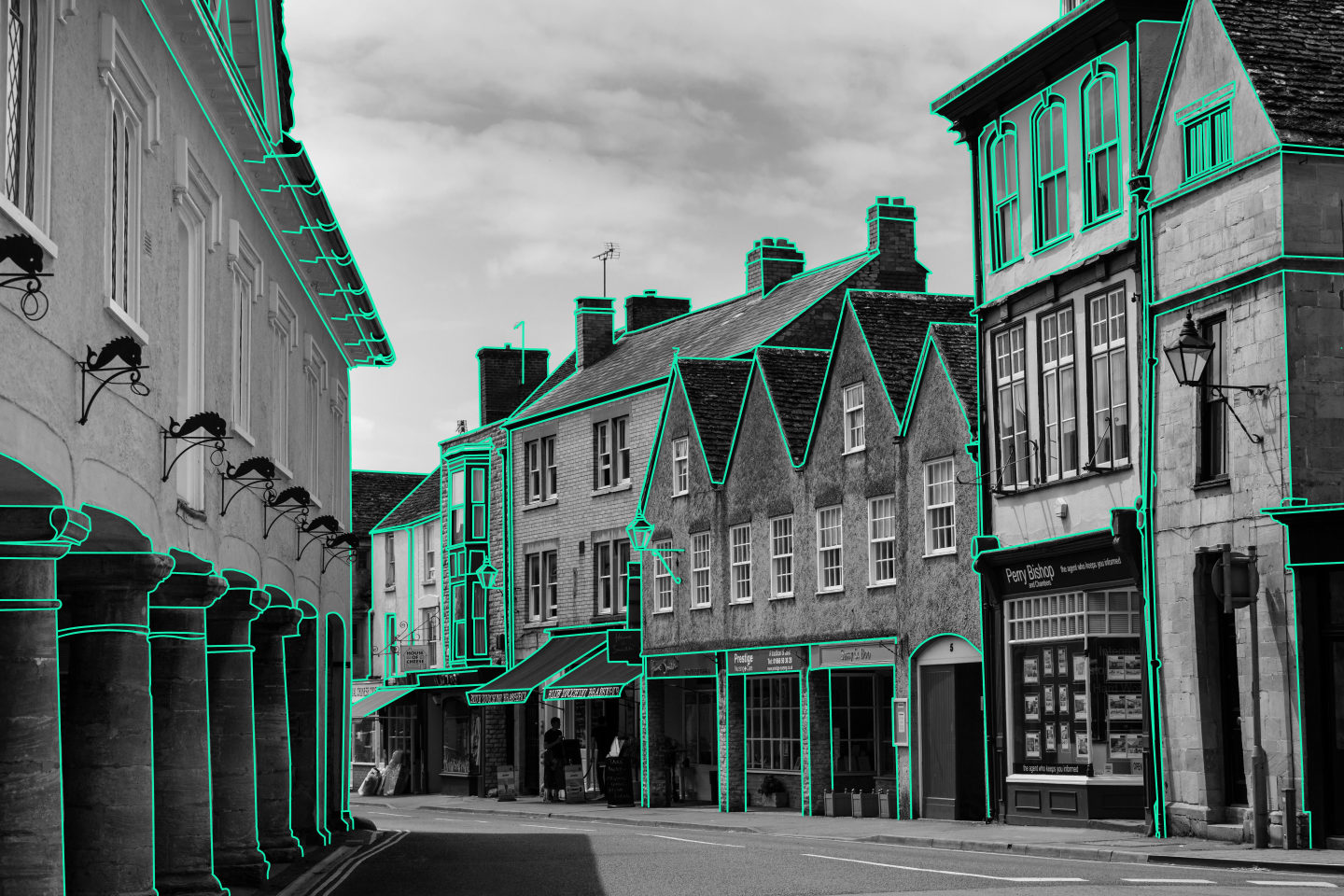
Securing a mortgage on a listed pub is more complex than financing a standard commercial property due to the additional legal protections and conservation controls applied to listed buildings. Many traditional pubs across the UK are Grade II or Grade II* listed, meaning lenders must assess not only the trading business but also the regulatory constraints attached to the property.
 GuideRead more about Pub mortgages Northern Ireland
Pub mortgages Northern Ireland
Read about the lender requirements and application process for pub mortgages Northern Ireland.


Commercial mortgage calculator
Choose owner occupier for a business buying or refinancing premises it trades from, assessed on adjusted net profit before tax from the latest accounts, or investment for property let to tenants, assessed on lease income.
Common questions
Can I borrow money to buy a pub?
Yes, you can borrow money to buy a pub in the UK with a commercial mortgage. Lending is based on the pub's valuation and, if it is trading, its profitability. In our experience loans commonly run to 65% to 75% loan-to-value, depending on income, experience and risk.
Do I need a commercial mortgage to buy a pub?
Yes, normally. Pubs are classed as commercial property, so buying one in the UK needs a commercial mortgage. Lending is based on the valuation and, where the pub is trading, its profitability, rather than on residential affordability rules.
How much can you borrow to buy a pub?
For a trading, profitable pub, in our experience borrowing typically runs at 65% to 75% loan-to-value (LTV) against a going-concern valuation. The maximum also depends on sustainable earnings, often expressed as a multiple of EBITDA (commonly 5.0 to 5.5 times), and on the valuation, location and lender criteria.
What deposit will I need for a pub mortgage?
In our experience a trading pub typically needs a deposit of 25% to 30% of the purchase price, reflecting maximum loan-to-values of 70% to 75%. First-time operators and non-trading pubs sit nearer 35%, reflecting 65% LTV caps.
What is a freehold pub mortgage?
A freehold pub mortgage is a UK commercial mortgage used to buy a pub where the buyer owns both the building and the land. Lending is assessed on the property and, if the pub is trading, on the business's performance. In our experience loan-to-value typically goes up to 70% to 75%.
Can you get a residential mortgage on a pub?
Usually not. A trading pub is commercial property and needs a commercial mortgage. A residential mortgage only becomes possible where the property has lawful residential use and no longer operates as a pub.
Can I get a pub mortgage with adverse credit?
Some specialist lenders accept adverse credit on pub mortgages. Lenders credit-check every member of the ownership team, so disclosing any credit history for all parties at the outset avoids late declines.
Can you get a mortgage on a house near a pub?
Yes. A house near a pub can usually be mortgaged in the UK; lenders and valuers may take account of noise, late opening hours and licensing conditions, but being close to a pub does not by itself prevent a mortgage.
What type of commercial mortgage suits a pub?
One matched to the right valuation basis. For a trading pub that is usually a going-concern loan from a lender experienced in hospitality, in our experience at up to 70% to 75% loan-to-value. A pub without full trading accounts is usually lent against at around 65% of a 90-day valuation.
Are pub mortgages regulated?
Usually not. A pub mortgage is unregulated business lending unless you borrow personally and at least 40% of the property is used as a home by you or a close family member, in which case it is a regulated mortgage. Unregulated lending does not carry the consumer protections of the FCA's mortgage rules, so check who you are dealing with before you commit.
Talk it through with an adviser
Let’s talk property finance
Contact us
- Call our team
- +44 333 231 8206
- Email us
- [email protected]
- Opening hours
- Monday to Friday, 9am–6pm
Closed Saturday and Sunday
Your enquiry goes to our team, who will get in touch to discuss your next steps.